After our 11-day guided group trip on the Nakasendo Way, we took a 4-day break in Tokyo to rest and recharge, and then headed south to the Hakone region to start the 6-day Tokaido Wayfarer unguided trip also run by Walk Japan.
On a guided trip the guests need give no thought to how to get from inn to inn; transportation tickets are purchased for you, signs in Japanese are translated for you, it’s follow-the-leader all day every day. This allows you to relax and enjoy the scenery and the experience.
It’s almost…too stress-free. So we thought we would also try an unguided inn-to-inn walk. Even with detailed instructions provided (which were very good), all accommodations pre-booked, and extra luggage (one per person) transported for you, your brain has to work harder than on a guided tour. You have to pay closer attention to staying on the right route, learn to use railway ticket machines (though helpful attendants are usually available except at small rural stations), and focus harder on what Japanese speakers are trying to tell you then on a guided tour. We put the Google Translate app to good use!
All of which I found I enjoyed. I was more alert, more aware, and had different experiences than I had in our guided group earlier that month.
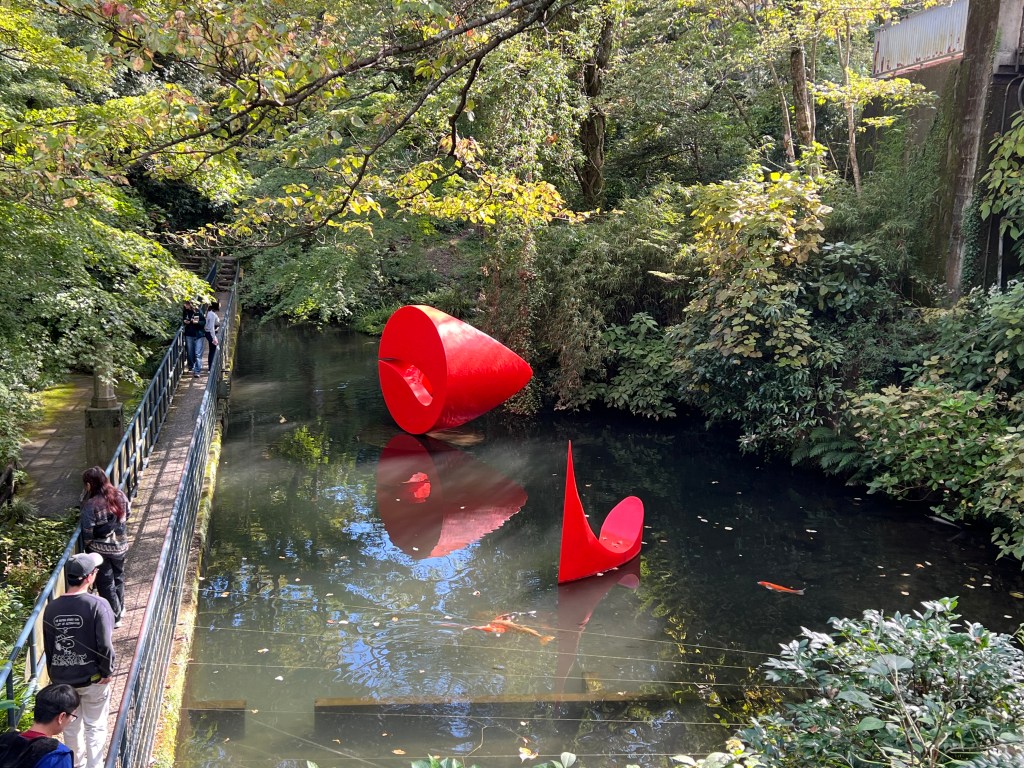
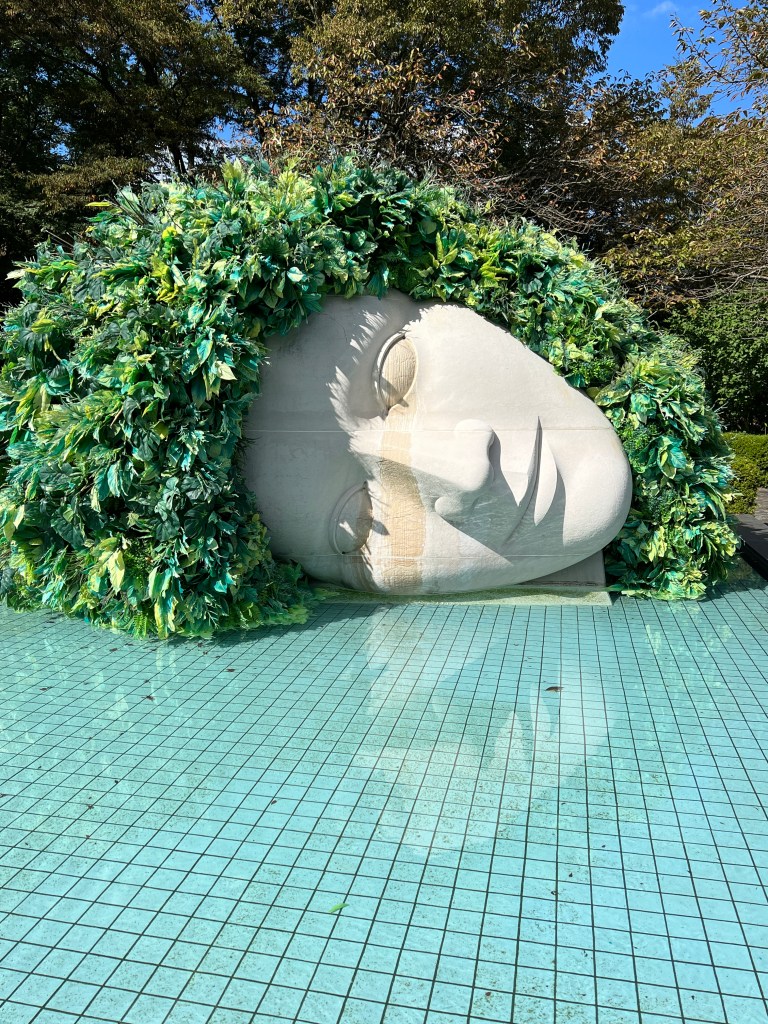
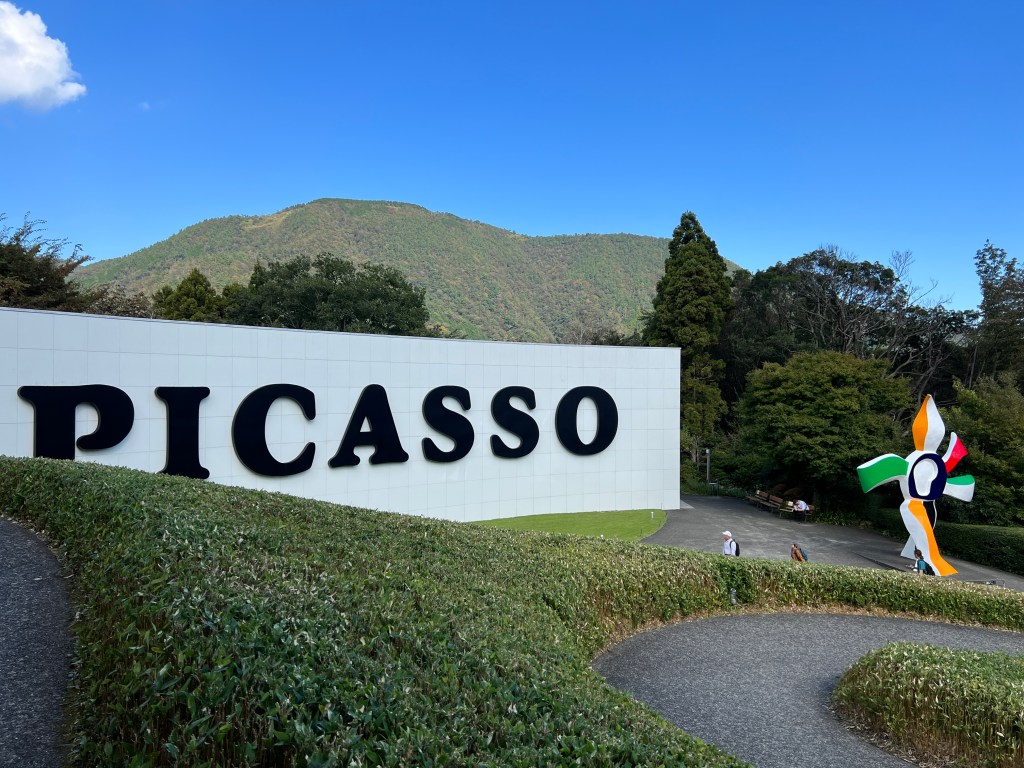
Our route began in the hot springs resort town of Hakone-Yumoto, where before starting walking we visited the nearby Hakone Open Air Museum. Definitely worth the time, featuring a wildly diverse collection of sculptures in a park-like setting and an intriguing Picasso exhibit inside a striking building.

Then we began our journey with a steep climb to Hakone Pass at 846m above sea level.


The mountain pass is depicted in the woodblock print by famed 19th century artist Utagawa Hiroshige, titled The Fifty Three Stages of the Tōkaidō.

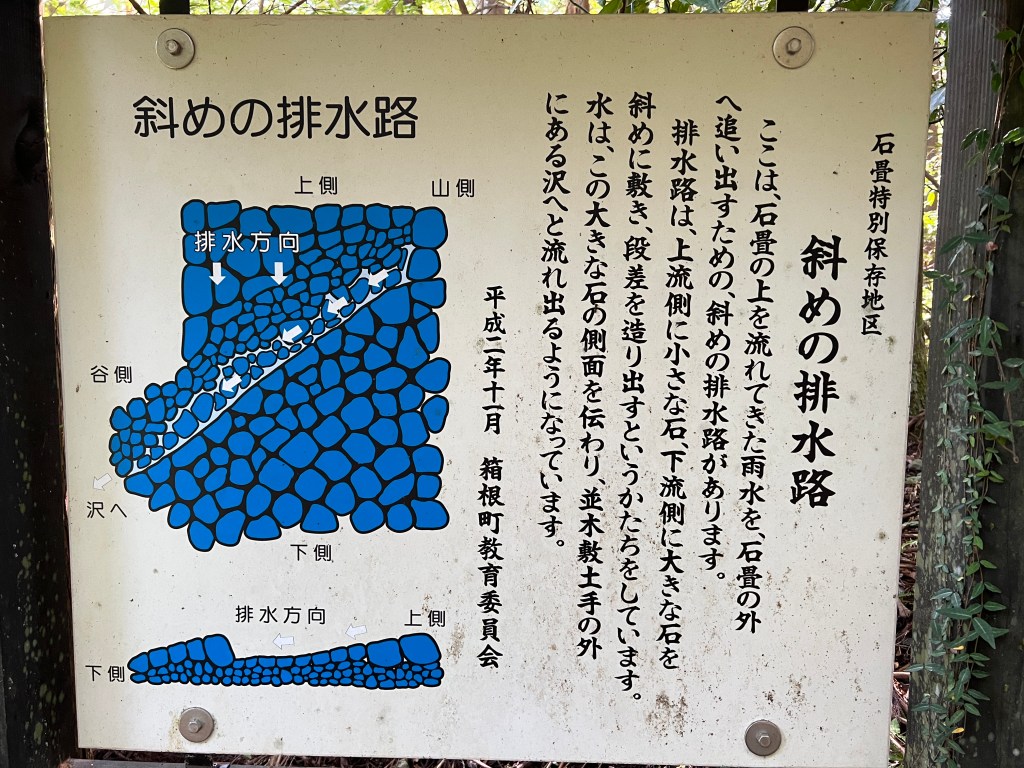
The ishidatami (uneven paving stones) path still shows evidence of engineered drainage channels, now mostly filled in with debris over the centuries.

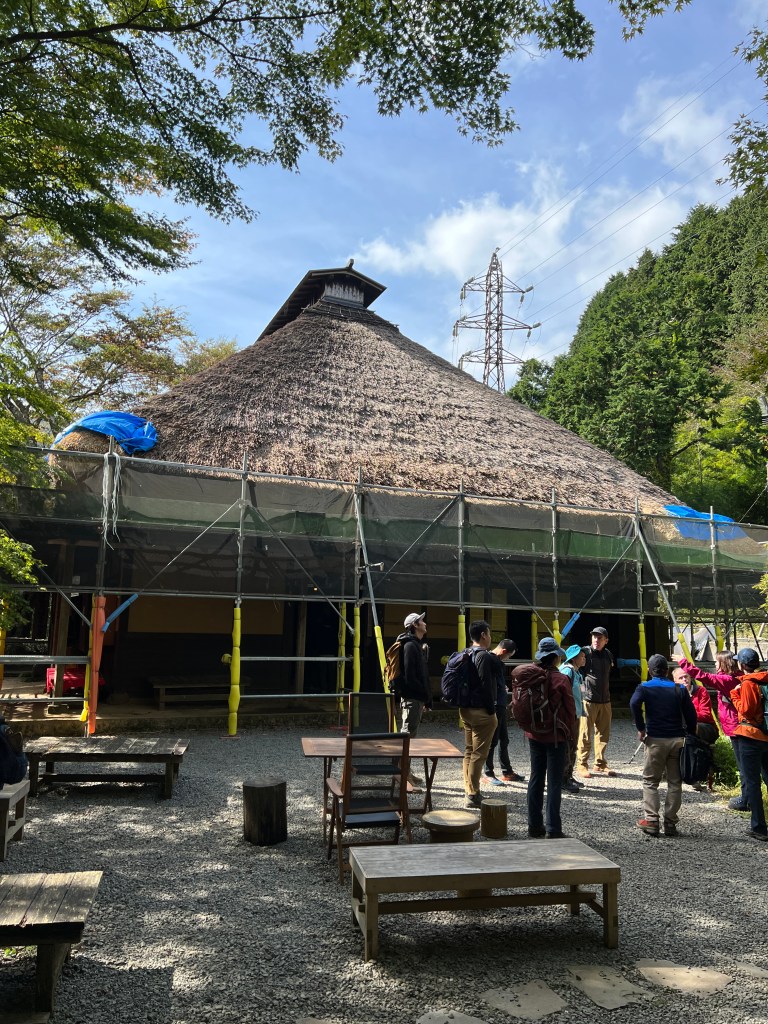
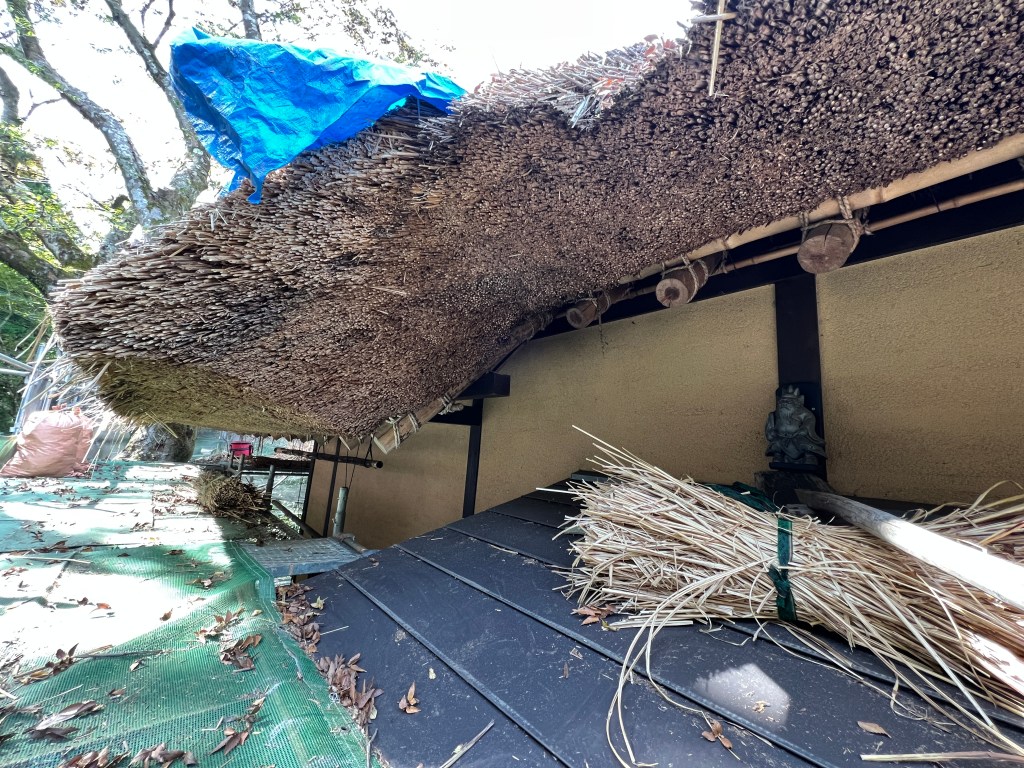
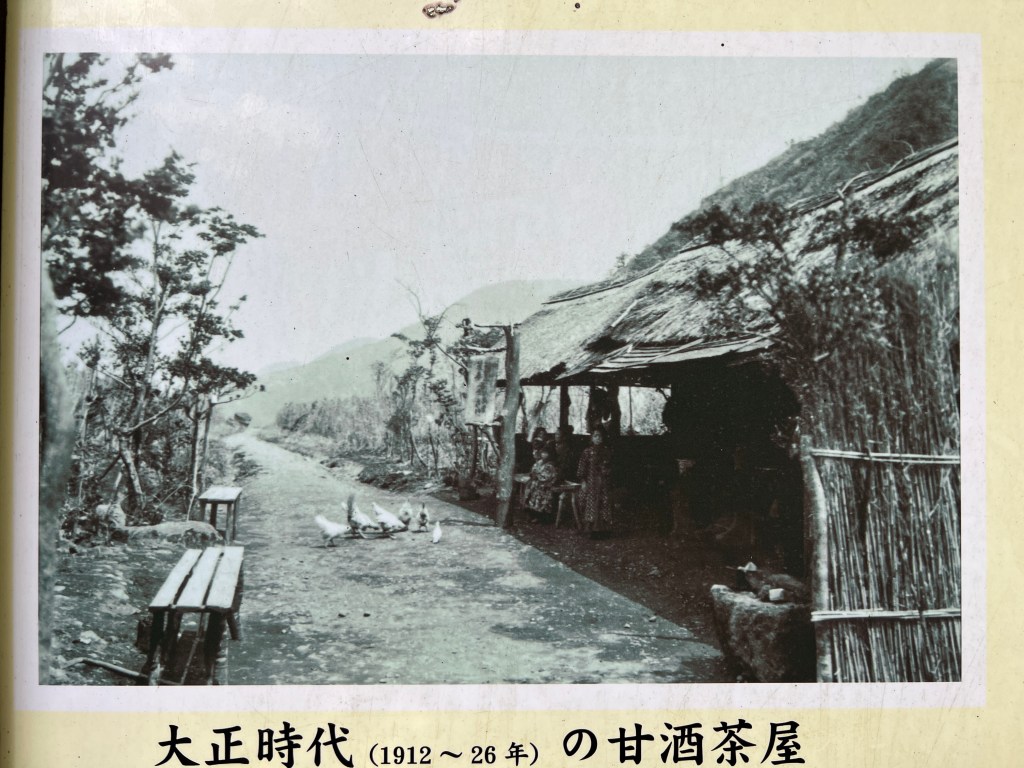
Just below the top of the pass is the Amazake-Jaya tea house, the last of many such tea houses along the route. Its traditional style thatched roof was set for replacement. Climbing up the scaffolding for a closer inspection I was impressed with how thick it was. Inside, the uneven packed earth floor surprised me. An old photo showed how it looked long ago.

The afternoon concluded with a peaceful walk through towering cedar trees before taking a bus to our accommodation for the night in Mishima.


 Electric Travels