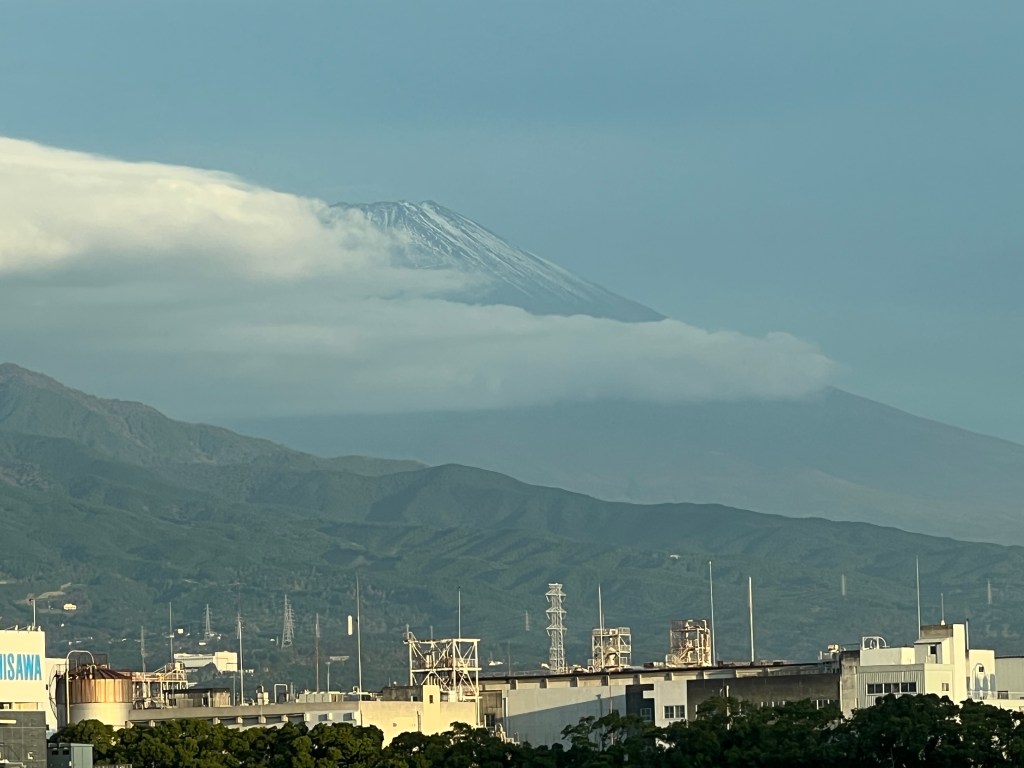
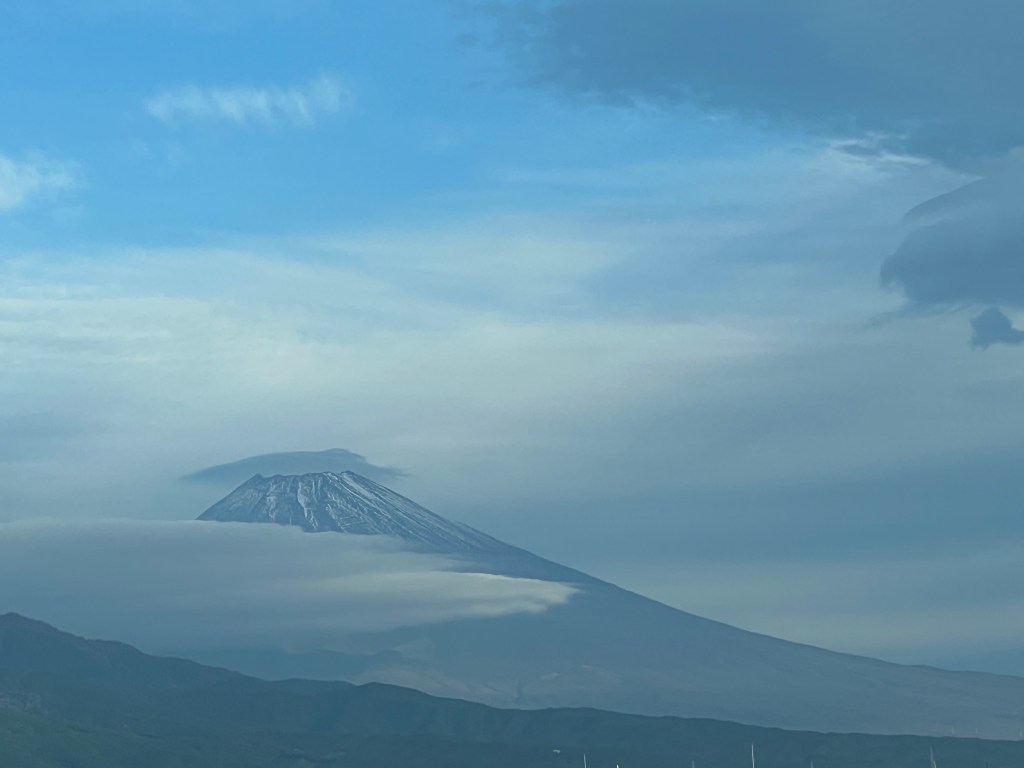
The next morning in Mishima we enjoyed shifting views of Mt Fuji — Fuji-San — in the distance. The clouds were constantly changing, one moment obscuring, the next revealing the peak of the volcano.
Our route that day included the Tokaido Hiroshige Art Museum which contains an extensive collection of classic woodblock prints, and where you can learn how the prints are made and even try your hand at making one. Here is on of his famed prints from the series Thirty-six Views of Mt. Fuji.

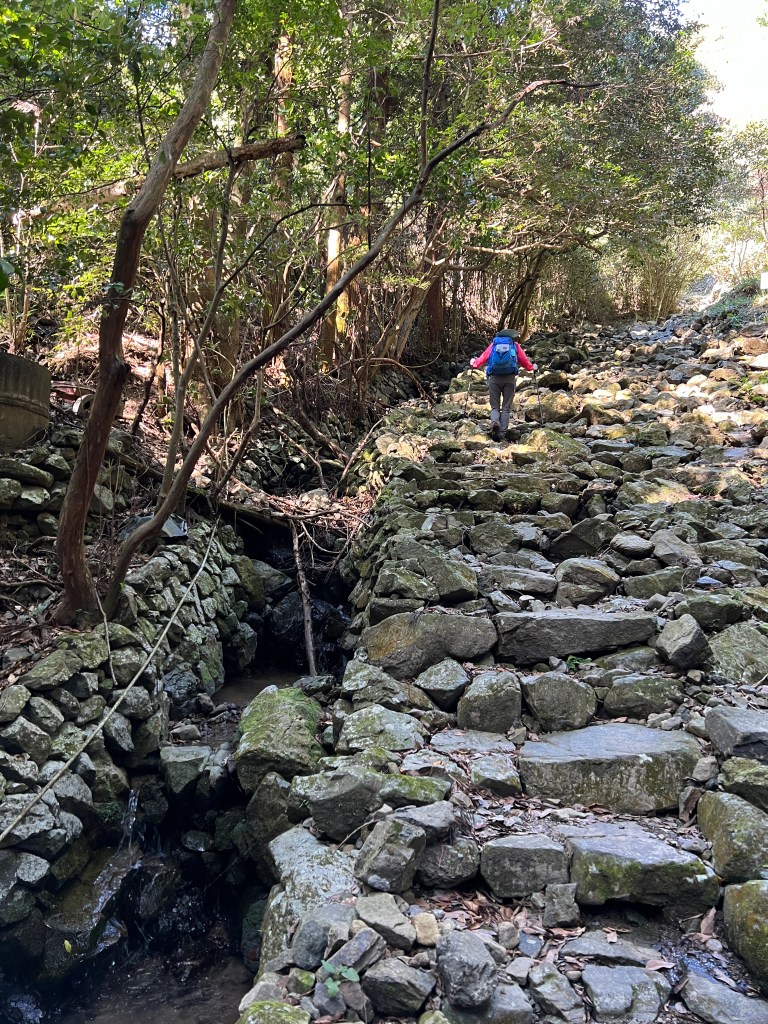
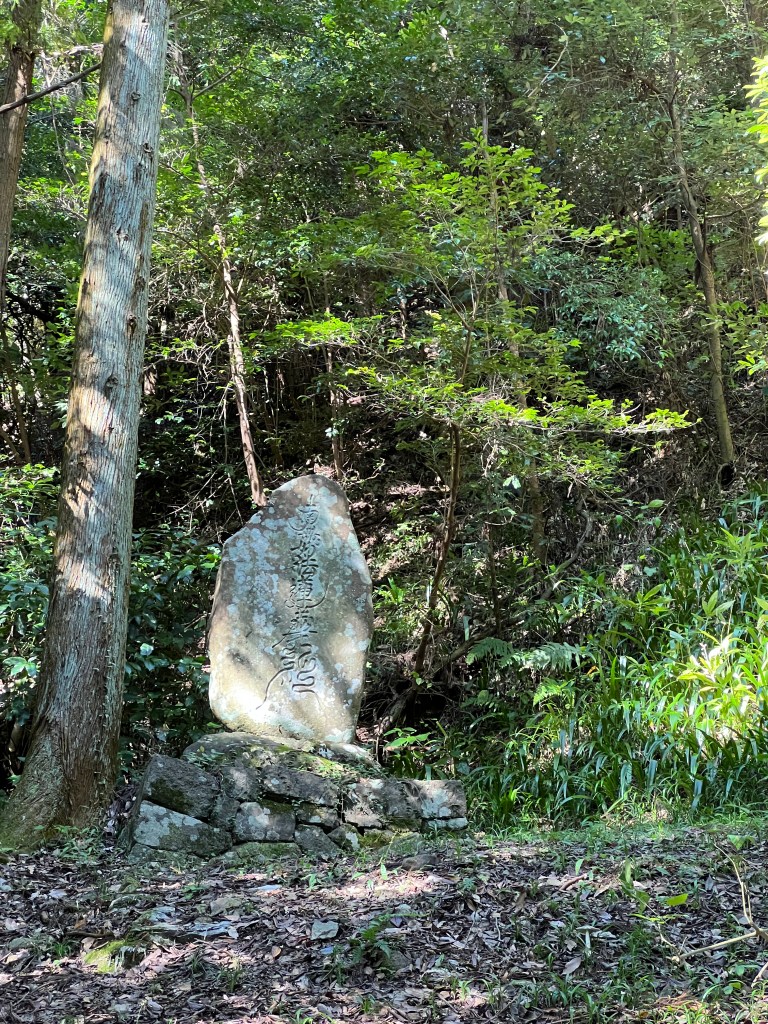
The route included a very rough section of the Tokaido that was closed long ago when it was bypassed by a more moderate path, resulting in the section being forgotten and only rediscovered in the 1960’s before being reopened. We also enjoyed our second sighting of the Japanese serow or kamoshika (middle photo below) which is somewhat related to goats and sheep but whose exact taxonomic classification is still debated.


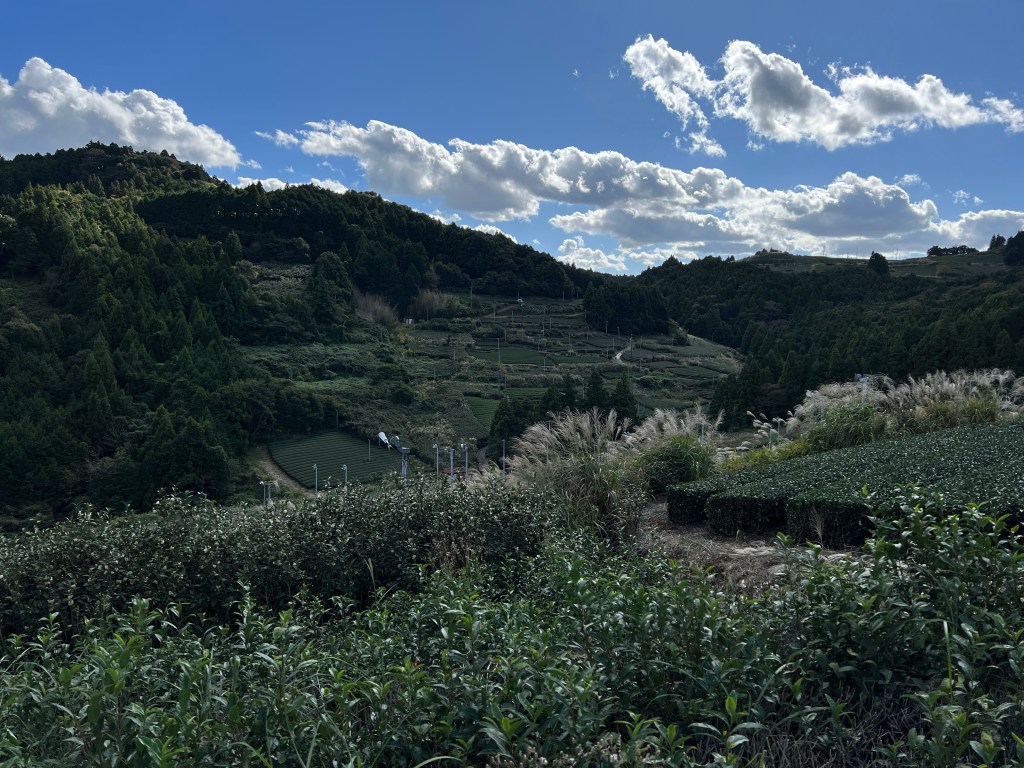
Another day’s route took us through fields of tea plants, which I had never seen close up before.

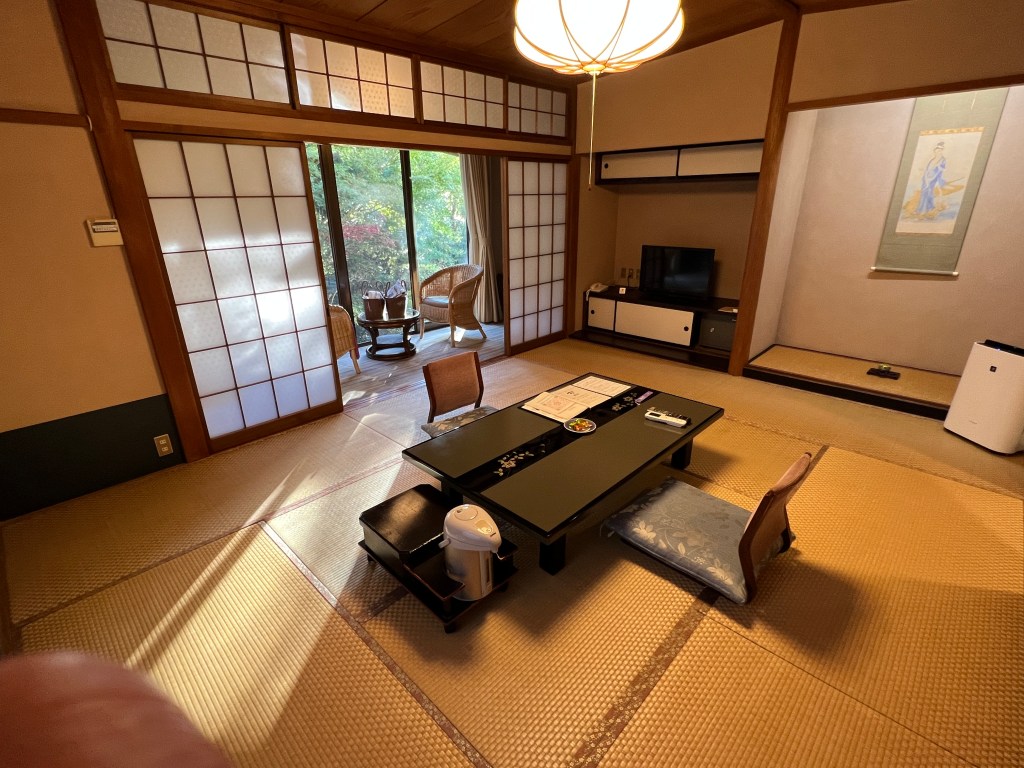
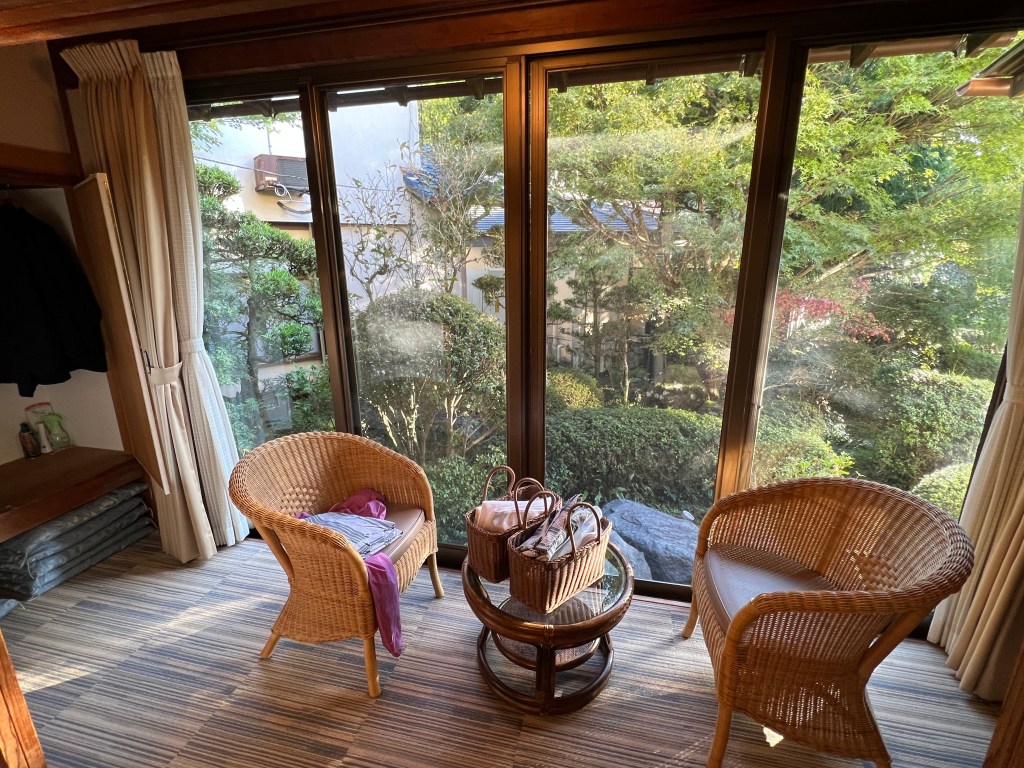
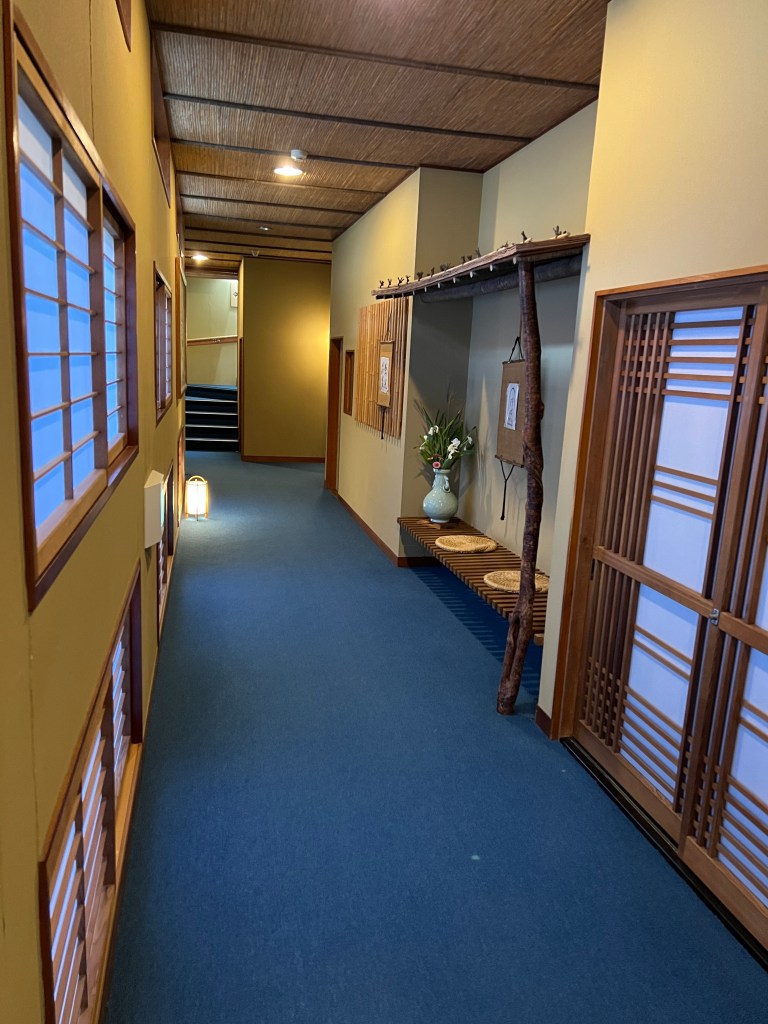
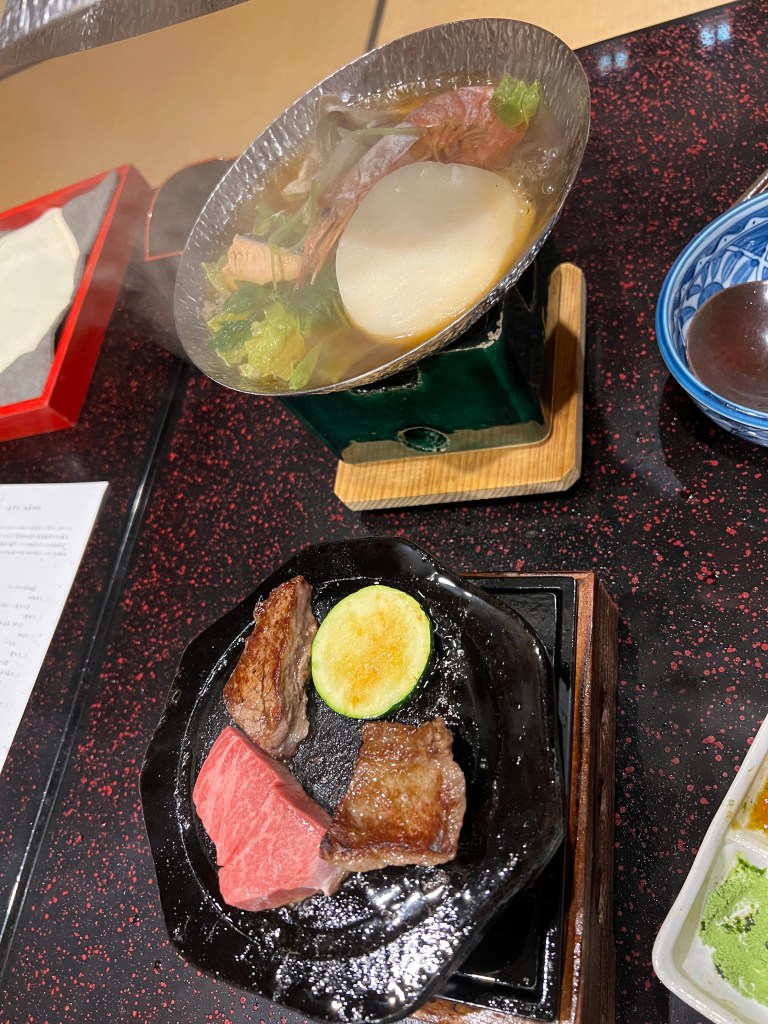
Our final accommodation was the most luxurious of the trip, the Masagokan ryokan onsen, near Kakegawa. The meals were beyond elaborate. But the futons weren’t any thicker!

It’s important to appreciate that much of the walking we did during our month in Japan on two trips with Walk Japan was on paved roads because the the ancient routes are covered over by modern structures and surfaces. Time was also spent every day on trains, buses, or sometimes both. All that was necessary to get to the original paths that were the objective of the trip, and they did not disappoint!
It was a wonderful experience to hike every day on paths that went back many centuries, to a time even before the Tokugawa shogunate first ruled over Japan in 1603. Before then feudal lords called daimyos battled constantly with each other and violence was ever present. The shoguns were overthrown by supporters of the Imperial Court in the Meiji Restoration of 1868. While Japan continued to resist foreign incursions and contact, at the same time it sought out foreign knowledge and technology, and rapidly modernized in the latter half of the 19th century. The ancient walking paths fell into disuse as trains and roadways took over. Now the parts that remain are being preserved and protected and hopefully will continue to provide enjoyable hiking for centuries to come.
 Electric Travels