Six years ago we spent time in Kyoto and soon planned a return trip to Japan, part of which would be an 11-day inn-to-inn guided hike on parts of the ancient Nakasendo post road that connected Edo (Tokyo) to Kyoto. So in late 2019 we excitedly booked a fall 2020 trip with Walk Japan. And then of course the world changed with the appearance of SARS-CoV-2 just weeks after we paid for our trip. The kind people at Walk Japan promised to keep our booking valid for the next year…and then the next year…and then the next year. Japan finally re-opened to tourists in the summer of 2023 and we arrived in Kyoto in late September, 10 days after receiving the latest COVID vaccine.
In the 17th century, the Nakasendo route was busy with merchants, feudal lords, itinerant samurai, and even a royal princess on her way to an arranged marriage in Kyoto with a powerful shogun. She reportedly brought with her over 20,000 attendants that formed a train 30km long. Given that the Nakasendo is basically just a path about 2-3m wide, that is a bit hard to comprehend!
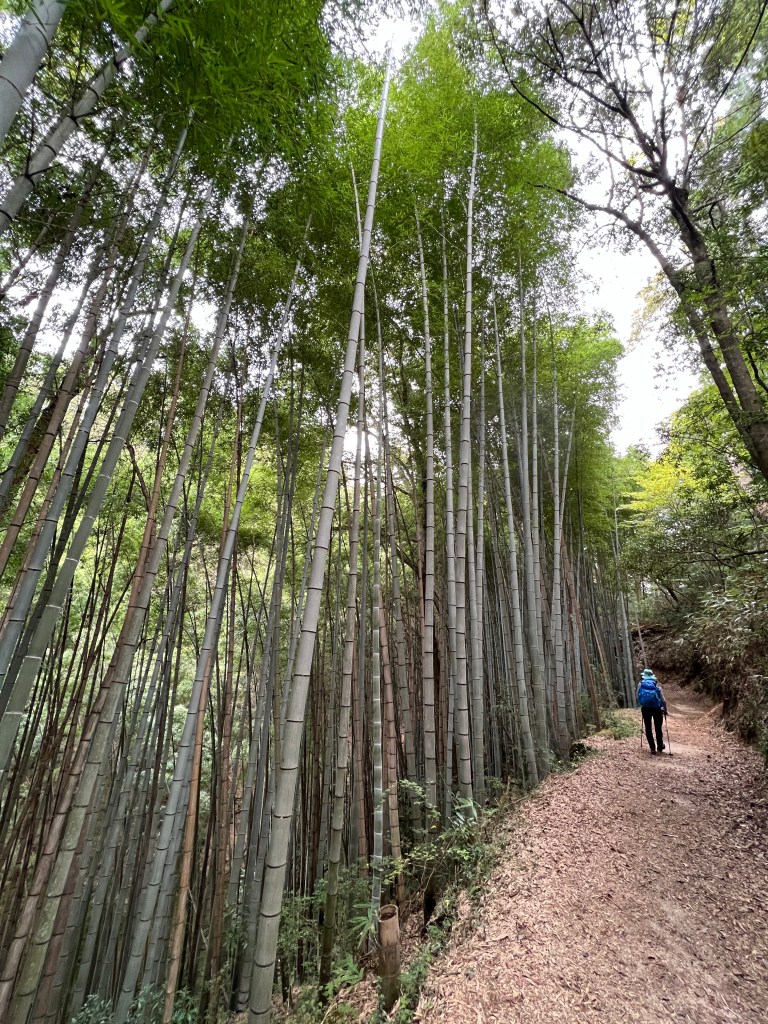
The route is approximately 500km (312 miles) long, and much of it has been paved over with modern roads or obliterated by buildings. But there are still sections through beautiful forests that are likely little changed, and even a few blocks in some small towns that have been preserved so as to appear something like they were centuries ago. On our trip we walked 136km (85 miles) over nine days, part of the time on rural paved roads. We used trains and buses arranged by Walk Japan (you don’t have to do any planning) to skip the less interesting parts of the route.


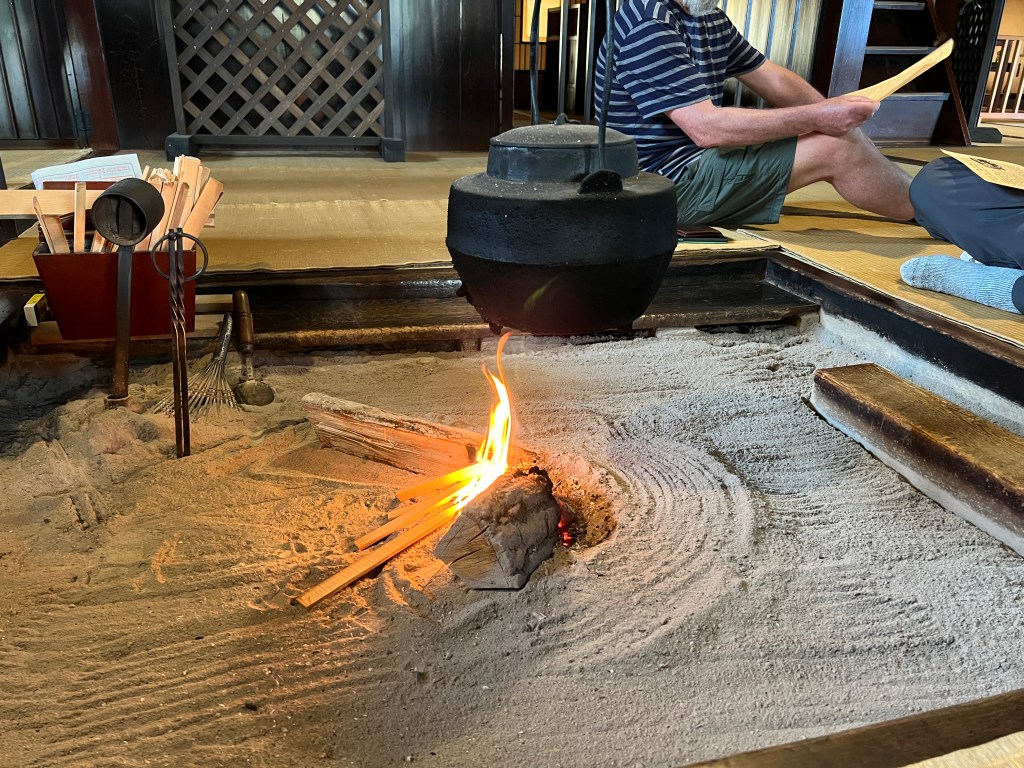
We usually stayed in centuries old ryokan inns, updated with electricity and modern bathrooms. Some of them still had a charcoal fire pit lined with fired clay blocks in the main living area — in an all wood structure — below a hole in the roof to let the smoke out. But in reality the smoke smell permeated the building. We learned that when the family gathered around the fire, the father sat on the side with the thickest tatami mat and the children sat on bare wood to teach them the lesson that life was hard and often unfair and they needed to accept that. Our rooms had walls separated from adjacent rooms by sliding shoji panels; you could hear everything. For sleeping there were thin futon pads and a down comforter. A stack of two futons would be laid out, but usually there were a few extra in the closet and I would always take as many as were available; five futons felt a lot better! Some places only offered a traditional style pillow filled with buckwheat, which to me is intolerable; noisy when you move and very hard. I had anticipated that and had packed a small down pillow compressed in a stuff sack.



Distance on the Nakasendo was originally indicated by dual earthen mounds called ichirizuka, meaning “one ri mound”, a ri being 3.9km (2.44 miles). Most of them no longer exist, but we walked past several of them.


 Electric Travels
Interesting! The flagstones on the road in one of the picture are reminiscent of a Roman road ….
LikeLike