The tiny villages of the Zagori region, scattered across the mountains in Epirus near the Albanian border combine historic authenticity, rustic charm, stupendous views, a minimum of infrastructure and services, and startlingly good internet, making them a vacation draw for both Greeks and international tourists.
In fact it seems as if without tourism the towns would disappear, reabsorbed back into the hillsides they perch on. For six days we hiked between villages and many of them were ghosts of their former selves; crumbling buildings with permanent populations not exceeding the fingers of both hands, according to our local guides. Critically, essentially all the remaining inhabitants are elderly. The larger villages of a few hundred people seemed to consist of small “boutique” hotels, rooms for rent, a church (of course) and a few cafes or restaurants located near the town square which was invariably centered around a huge plane tree (Platanus species, in North America we would call it a sycamore).

The villages were originally connected by stone trails for moving pack animals around, such as mules or horses used to transport food and merchandise. Now tourists use the same trails as footpaths, but the design of the cobblestones can make for tough walking!
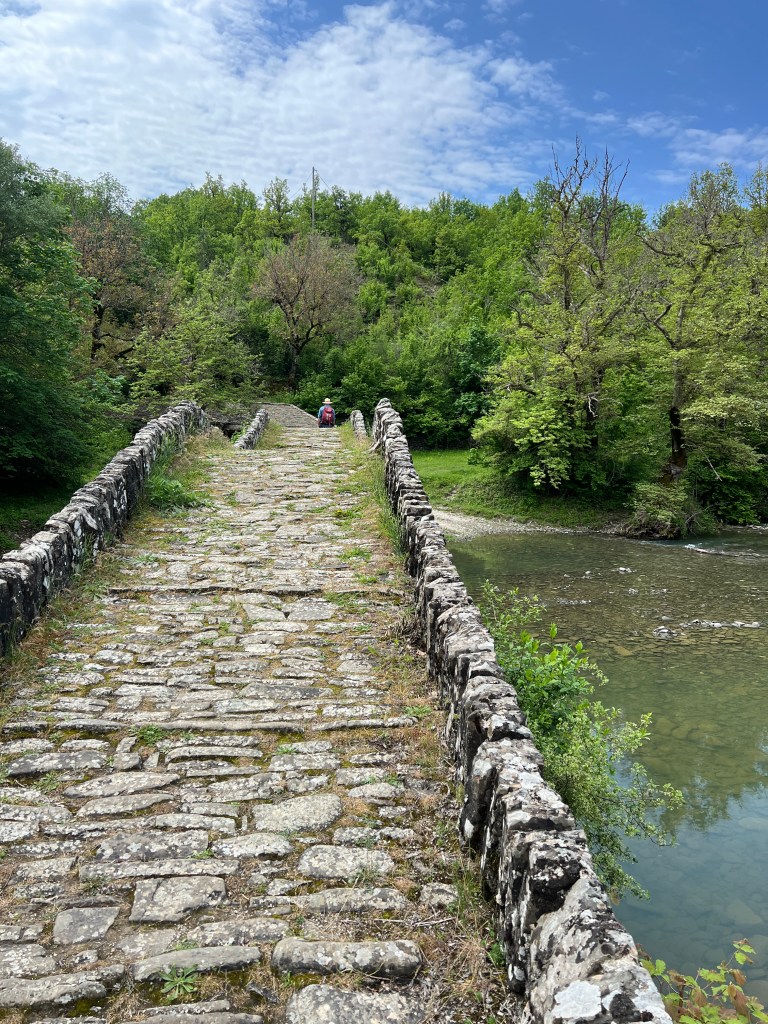


A century or so ago, rough roads were constructed between villages for more efficient transport as motor vehicles replaced pack animals. But the paths for the most part continued to be maintained, as did the stunning stone bridges that were built several centuries ago to cross the many rivers in the region. The bridges are so well built that they do not need much attention and have held up very well (of course vehicles are not allowed on them as they were not designed for such loads).
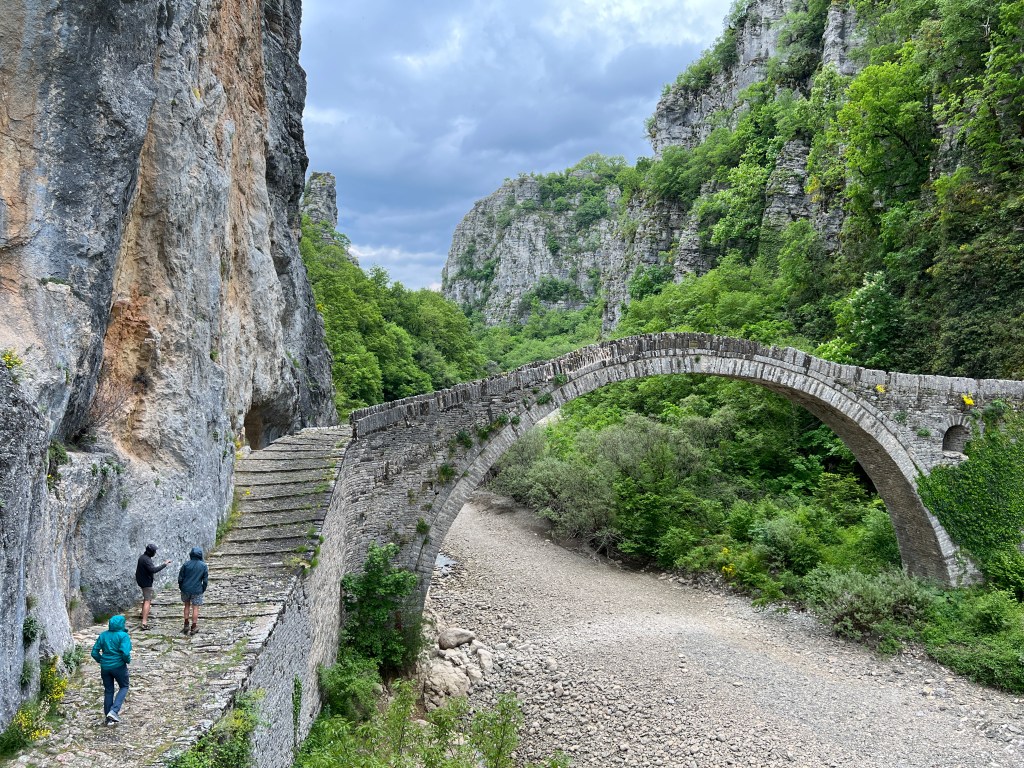
Multiple arches were also employed, and symmetry was not the objective, just stability and to as an adaptation to the specific topography of the location.

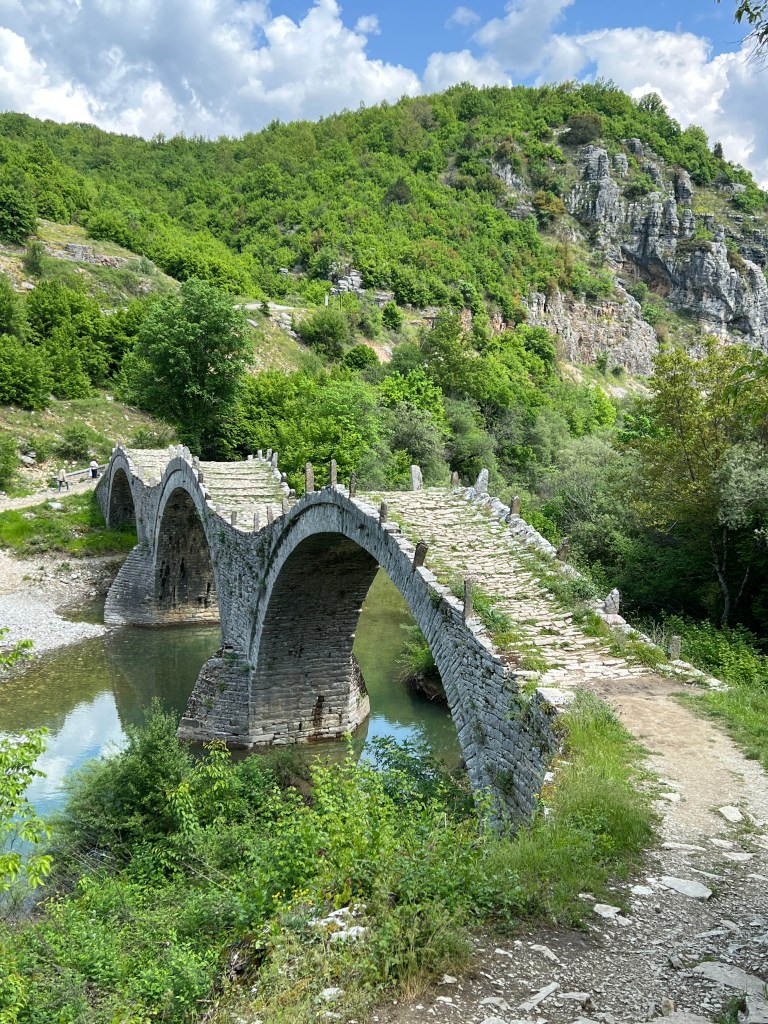
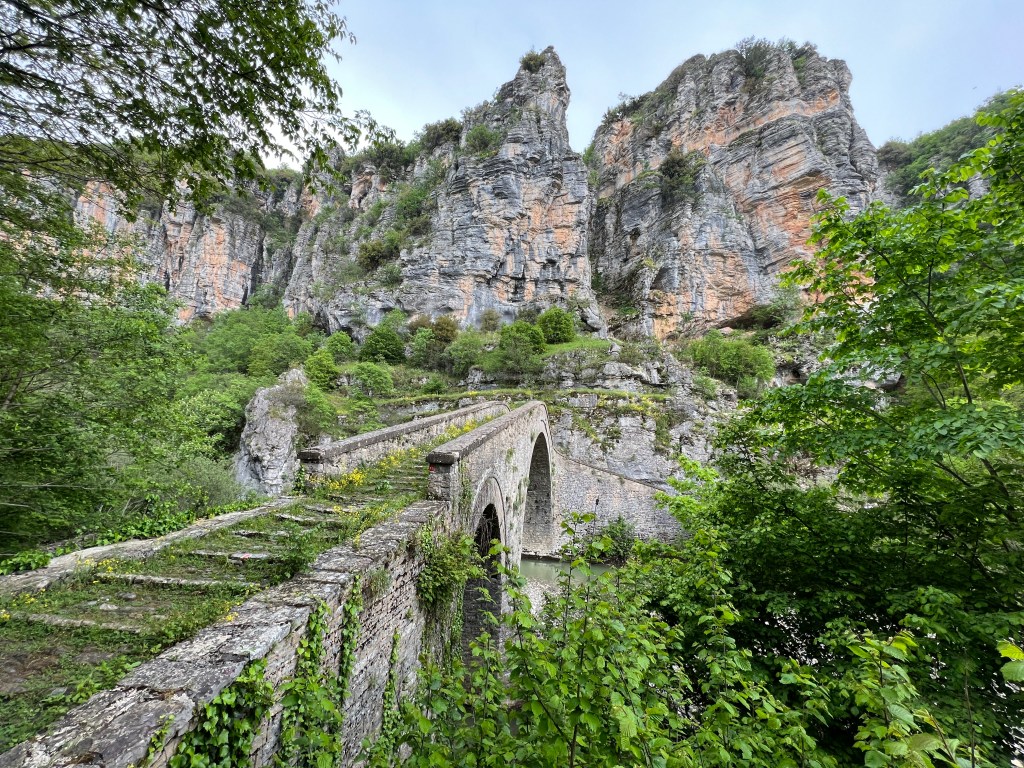
Highly skilled workers were required to build bridges of this type. After constructing the piers they built scaffolding to support the arch and then laid the arch stones outwards from each side towards the center, using a thin layer of fine sand between the stones. With the final center stone in place, the scaffolding was carefully removed and each stone sank a few millimeters into place, ensuring a solid joint. They are marvels of engineering.


In late May we enjoyed mostly fair weather, with daily highs around 20C/68F and usually an afternoon thunderstorm or two (one which featured hail was well).


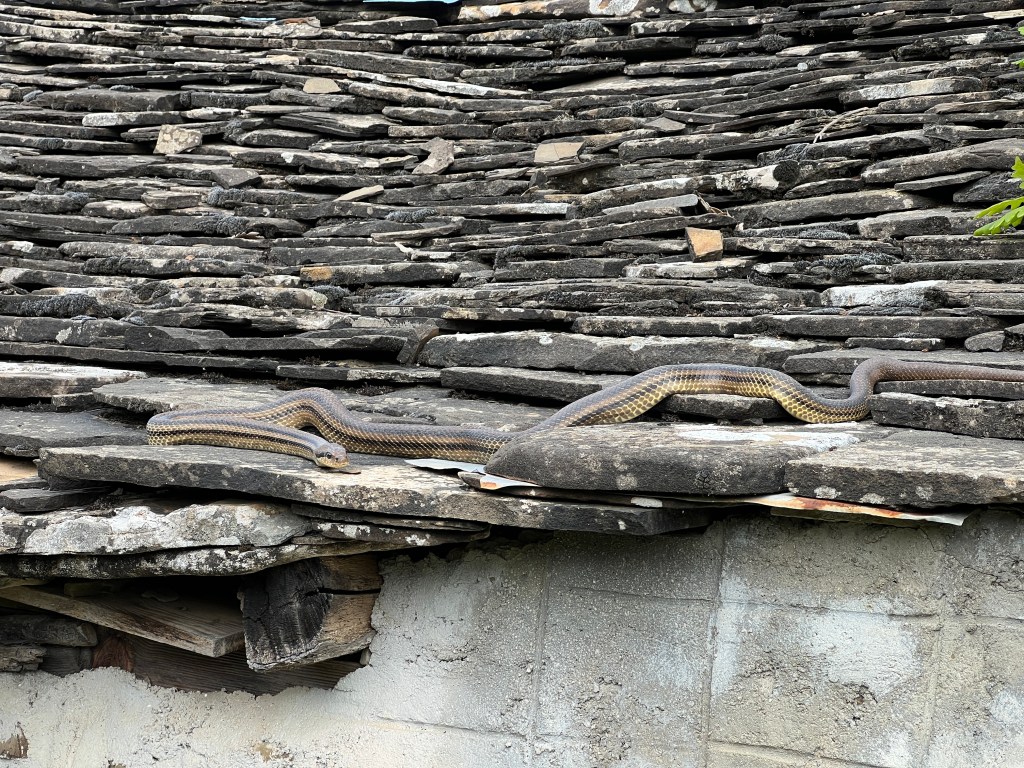
At the sagging remains of an Ottoman era toll booth (the ruling Turks built them to extract taxes on merchandise moved on the paths) we chanced upon a five foot long four lined snake, on the prowl for lizards and rodents. Non-venomous, people are happy to have them around their houses to control the mouse population.

The mountain villages are also facing an existential threat; a warming climate that has dramatically reduced annual snowfall in recent decades according to longtime residents, snowfall that they depend on to supply them with water throughout the year. If in the future water has to be trucked in to support the tourist industry that will increase operating costs for the hotels and restaurants and living costs for the residents, potentially resulting in more of the villages becoming economically non-viable.
The Zagori region has gone through many dramatic changes over the thousands of years that humans have lived there. Just a few centuries ago many of the slopes and hilltops were denuded by livestock grazing and farming. The ancient circular “threshing floor” structure shown below was used to separate grain seeds from chaff, and at that time the trees pictured did not exist. Village life was vibrant, centered around the church and harvest festivals. Now the land is slowly rewilding and the forest is taking over.

 Electric Travels